Gamakay Tk75He V2 Review: Real User Experience After 3 Months
Introduction — Why I Bought the Tk75He V2
I've been using the Gamakay Tk75He V2 for three months now. I bought it because I wanted a compact, high-quality mechanical keyboard that felt more substantial than mass-market office boards but didn't take up the desk space of a full TKL. In my experience, mid-sized 75% layouts hit a sweet spot: they keep dedicated arrow keys and a function row while trimming down wasted bezel and extra columns.
My expectation going into this was simple: a solid build, hot-swap flexibility so I could try different switches, and a pleasant typing sound without doing major modifications. What I found was a keyboard with a lot of promise — and a few quirks that you'll want to know about if you’re considering buying one.
Overview: What the Tk75He V2 Is (From My Perspective)
My unit is a compact 75% layout keyboard with a centered compact footprint, a USB-C connection, and hot-swap switch sockets. Out of the box it felt heavier and more substantial than I expected for its size. The case has a matte finish and the keycaps that shipped with my board were comfortable enough to use daily.
One thing I appreciated immediately: the layout keeps arrow keys and a function row accessible without needing to use awkward layer combos. In my day-to-day work — a mix of writing, spreadsheets, and occasional gaming — that makes a real difference.
Unboxing and First Impressions
Unboxing the Tk75He V2, I noticed the packaging was tidy and functional. The keyboard arrived with a detachable USB-C cable, a small keycap puller, and a few extra keycaps. The keycaps themselves were preinstalled and felt better than thin ABS stock caps you find on cheap boards. The keyboard had some factory oil on stabilizers and switches that gave a slightly dampened initial feel — not unpleasant, but noticeable.
First typing impressions: the stock combination of plate and case resulted in a mildly hollow tone with a mid-high pitch. It was pleasant for short sessions but after longer typing sessions I found myself wishing the sound was a bit deeper and more muted. That’s a subjective preference, but it did nudge me toward doing minor sound mods, which I’ll detail below.
Build Quality and Materials
In my experience the Tk75He V2 feels well put together. The case is rigid with minimal flex, and the PCB is well-seated. The bottom has rubber feet that keep the keyboard from sliding around on my desk. The bezel is slim which makes the layout look compact and modern.
One area where I was pleasantly surprised was the overall weight. It’s heavier than similarly sized budget boards, so it doesn't wander when you’re typing. On the other hand, the finish on the case can show fingerprints if you’re prone to touching the frame a lot, which is a minor cosmetic annoyance.
Switches, Stabilizers, and Keycaps
My unit shipped with hot-swap sockets, which I immediately appreciated because I like testing different switches. I swapped the stock switches for a tactile set I had, and that process was painless — the hot-swap sockets are snug without being too tight. If you’re someone who enjoys experimenting with switches, the hot-swap feature alone will save you a lot of soldering headaches.
Stock stabilizers were the most honest surprise: they were functional but not perfect. There was a little rattle on the larger keys (spacebar and enter) out of the box. I lubed them and added a bit of band-aid-style foam under the spacebar, which made a clear improvement. What I found was that with a small amount of time spent on stabilizers and a switch swap, the keyboard's feel and sound improved dramatically.
Shop the latest Laptops & Computers picks on Amazon.
Browse Now →The keycaps are decent PBT-feel (though I didn't test material composition extensively). The legends are clear and didn't wear in the first three months, but they are thinner than some premium sets I've used. For anyone who cares deeply about keycap profile or texture, plan to replace keycaps eventually — they’re good, not amazing.
Typing Experience and Sound Profile
Typing on the Tk75He V2 after my basic mods (stabilizer lubing and adding a thin foam layer inside the case) is one of the best parts of owning this board. The typing feel is solid with a short to medium travel feel depending on the switches you choose. My primary daily switches are a tactile 62–68g set and they felt right at home in the Tk75He V2.
What I noticed about the sound profile: out of the box it was brighter and a little hollow. After the mods I mentioned, the sound became warmer and more bass-forward — less ping, more thud. If you're the kind of person who enjoys modding keyboards, you'll get a lot of reward from small changes here.
Firmware and Programmability
In my experience, the Tk75He V2 is programmable through common community tools — I used a standard keymap editor to remap a few keys and set up a custom function layer. The keyboard responds well to custom layouts and macros; however, the documentation that came with my board was minimal, so I relied on community resources and my own trial-and-error to get things exactly how I wanted.
If you need out-of-the-box advanced macro support with polished software, expect to spend a little time with generic configurators or community firmware. That said, once configured the keyboard retains settings reliably.
Daily Use: Work, Gaming, and Portability
I've used the Tk75He V2 for programming, long-form writing, and a bit of gaming. For work, the arrow cluster and function row make everyday workflows smoother than a 65% layout would. For gaming, the compact layout is comfortable; I didn’t feel cramped and my hand positions translated well from other boards I own.
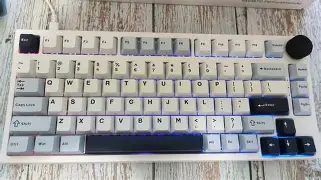
Regarding portability: it's not a lightweight travel board, but it is compact enough to toss into a larger backpack. Because it’s heavier, I wouldn't call it ideal for daily commute use, but it's fine for occasional travel or switching between a home and office desk.
Price Perception and Value
When I bought the Tk75He V2, I felt the price was reasonable for a hot-swap, well-built small-batch board. In my experience, you get a lot of keyboard for the money, especially if you're willing to do minimal tuning. If you expect a perfectly tuned, premium-sounding board straight from the factory, be prepared to put a little effort into it.
What I Liked (Pros)
- Great layout: The 75% form factor keeps arrow keys and a function row accessible without wasted space.
- Hot-swap sockets: I appreciated being able to test different switches without soldering.
- Solid build: Heavier, rigid case that sits firmly on the desk.
- Customizable sound: Responds well to common mods — little effort yields big improvements.
- Good daily ergonomics: Typing for long stretches was comfortable after minor tweaks.
What Bothered Me (Cons)
- Stock stabilizers need attention: They worked but had noticeable rattle out of the box.
- Sound needs tuning: The unmodified board sounded a bit hollow and bright; I had to mod it to reach the tone I prefer.
- Documentation: Minimal documentation for programming meant I spent time searching community forums for help.
- Finish shows fingerprints: The case can show marks if you touch it a lot, which bothered me aesthetically.
- Weight versus portability: It’s heavier than similarly sized travel boards if you plan to carry it every day.
Comparison: Tk75He V2 vs. Two Popular Alternatives
| Feature | Gamakay Tk75He V2 (my unit) | Keychron Q1 (similar class) | Akko 3068 (compact alternative) |
|---|---|---|---|
| Layout | 75% with arrow keys and function row | 75% solid aluminum build | 65% compact (no dedicated function row) |
| Hot-swap | Yes — very convenient in practice | Often available (depends on model) | Some models have hot-swap |
| Build quality | Good — heavier, rigid case | Very solid — premium machining | Good — lighter and more portable |
| Stock sound | Bright/hollow (improved with mods) | Generally denser and deeper | Quieter, less resonant |
| Programmability | Customizable via common tools; limited docs | Strong community and software support | Basic remapping; varies by model |
| Price/value | Very good if you mod slightly | Premium price but very polished | Affordable and portable |
Buying Guide: Is the Tk75He V2 Right for You?
If you’re considering the Tk75He V2, here are the key questions I asked myself before buying and what I’d advise now that I’ve used it for several months:
Find top-rated Laptops & Computers products at great prices.
Browse Now →1. Do you like 75% layouts?
If you want a compact board but still value dedicated arrow keys and a function row, the 75% layout is a great compromise. I found it saved desk space while retaining essential keys for productivity.
2. Will you tinker with switches and sound?
The Tk75He V2 rewards light modding. If you want a perfect experience straight out of the box, be ready to either accept the stock sound or spend a couple of hours lubing stabilizers and adding foam. If you enjoy swapping switches, the hot-swap sockets are a big win.
3. How important is documentation and vendor software?
My unit required a bit of community research to fully program. If you need turnkey software with polished GUI support, factor that into your decision. If you're comfortable with community tools and firmware, you’ll be fine.
4. Do you need lightweight portability?
The board is heavier than a plastic travel keyboard. If your primary use is on a home or office desk, that weight is a benefit. If you’re commuting daily with the keyboard, you may prefer a lighter alternative.
5. Are you okay replacing keycaps later?
The stock keycaps are fine, but if you’re a keycap enthusiast you’ll likely want a premium set eventually. The keyboard accepts standard keycap sets, so customization is straightforward.
Practical Tips From My Ownership Experience
- Invest 15–30 minutes lubing the stabilizers — it makes a very noticeable difference.
- Try a thin layer of foam inside the case to reduce hollow vibrations; I used a simple keyboard foam and it warmed the sound significantly.
- Experiment with different switches if you can. The hot-swap sockets make testing tactile, linear, and silent switches quick and low-risk.
- Keep backups of your keymap files. Once you’ve customized layers and macros, save the JSON so you can restore or transfer it later.
- Follow community threads for firmware tips — those are often more up-to-date than the quickstart that comes in the box.
Final Thoughts and Conclusion
After three months with the Gamakay Tk75He V2, what I found was a keyboard that delivers strong value for people who enjoy customizing their typing experience. I liked the layout immediately, appreciated the hot-swap flexibility, and enjoyed the solid construction. The negatives are honest but solvable: stock stabilizers and the bright out-of-the-box sound both improved significantly after modest mods.
If you want a plug-and-play premium-sounding keyboard with perfect factory tuning, this might not be the one for you straight away. If, on the other hand, you enjoy dialing in switches, stabilizers, and a little case foam to create your ideal sound and feel, the Tk75He V2 is an excellent platform that rewards a small amount of effort with a very satisfying daily experience.
In my experience, this board sits in the sweet spot for hobbyists and intermediate users: flexible enough to customize, solid enough to feel like a proper tool, and compact enough to respect your desk space. After three months of daily use, I still reach for it first when I want a reliable, comfortable typing session.