I Switched to the 29Um69G B and Here is What Happened
The landscape of modern computing has shifted away from the standard 16:9 aspect ratio toward more expansive horizons. For years, the office and gaming environments were dominated by the traditional widescreen format, but the rise of Ultrawide monitors has fundamentally changed how users perceive productivity and immersion. Among the most discussed entries in this category is the 29Um69G B, a 29-inch 21:9 UltraWide IPS monitor that promises a blend of gaming performance and professional utility. This article explores the transition to this specific display, analyzing the technical nuances, the ergonomic shifts, and the overall impact on different workflows.
Switching to a 21:9 aspect ratio is rarely just about getting a larger screen; it is about changing the digital real estate available to the user. The 29Um69G B occupies a unique middle ground in the market. While 34-inch monitors often grab the headlines, the 29-inch form factor offers a pixel density that many find superior for text clarity while maintaining a footprint that fits comfortably on standard-sized desks. For those moving from a legacy 22 or 24-inch monitor, the jump to the 29Um69G B represents a 33% increase in screen territory, providing a panoramic view that can eliminate the need for complicated dual-monitor setups.
Detailed Product Analysis and Performance
The 29Um69G B is built around an In-Plane Switching (IPS) panel, which is widely regarded for its superior color reproduction and wide viewing angles compared to Twisted Nematic (TN) or Vertical Alignment (VA) alternatives. When a user first powers on the display, the immediate observation is the vibrancy and consistency of the colors. With sRGB coverage typically exceeding 99%, this monitor is designed to satisfy not only gamers but also entry-level creative professionals who require accurate color representation for photo editing or digital design.
One of the standout features of this specific model is its Motion Blur Reduction (MBR) technology. In the world of displays, "ghosting" or "blur" occurs when pixels cannot change colors fast enough to keep up with fast-moving objects on the screen. The 29Um69G B achieves a 1ms response time through its MBR implementation, which works by strobing the backlight in sync with the refresh rate. This results in much sharper transitions during high-action gaming sequences or even when scrolling through long, text-heavy documents. However, users should note that activating MBR often reduces the overall peak brightness of the panel, a trade-off common in many high-speed display technologies.
The resolution of 2560 x 1080 is often referred to as "UltraWide Full HD." While some purists argue for 1440p at this width, the 1080p vertical resolution on a 29-inch panel translates to a pixel pitch that is easy on the eyes for productivity. Text remains crisp without the need for Windows scaling, which can sometimes cause blurriness in older applications. Furthermore, for gamers, the 1080p resolution is significantly less demanding on the Graphics Processing Unit (GPU) than 1440p or 4K. This allows for higher frame rates and smoother gameplay on mid-range hardware, making the 29Um69G B an accessible gateway into Ultrawide gaming.
The Productivity Workflow Shift
In a professional setting, the transition to the 29Um69G B often leads to a "snap" culture. Both Windows and macOS have improved their window management systems, allowing users to snap two full-sized browser windows or applications side-by-side with no overlap. This is the primary "Aha!" moment for many users. On a standard 16:9 screen, side-by-side windows often feel cramped, requiring horizontal scrolling. On the 21:9 canvas of the 29Um69G B, there is enough horizontal space to have a research document open on the left and a word processor on the right, mimicking the utility of two smaller monitors without the distracting bezel in the center.
Video editors and music producers benefit perhaps more than any other professional group. The elongated horizontal space allows for a much longer timeline view. In software like Adobe Premiere Pro or DaVinci Resolve, being able to see more of the project timeline at once reduces the constant need to zoom in and out, significantly streamlining the editing process. Similarly, in Digital Audio Workstations (DAWs), the extra width accommodates more tracks and mixer channels, keeping more of the creative process visible at a single glance.
Gaming Immersion and Features
For gaming, the 29Um69G B includes several proprietary features aimed at competitive play. Beyond the 1ms MBR, the monitor supports AMD FreeSync technology. This feature synchronizes the refresh rate of the monitor with the frame rate of a compatible AMD graphics card, effectively eliminating screen tearing and stuttering. Even for users with NVIDIA cards, recent driver updates often allow for "G-Sync Compatible" functionality over DisplayPort, providing similar benefits.
The "Black Stabilizer" is another feature frequently cited by users. It works by detecting dark scenes and enhancing the brightness in those specific areas without overexposing the lighter parts of the image. In competitive first-person shooters, this can be the difference between spotting an opponent hiding in a shadow and being eliminated. Coupled with several pre-set gaming modes (FPS 1, FPS 2, RTS), the monitor allows for quick adjustments based on the genre of the game being played.
Discover deals on Electronics — updated daily.
See Deals →Specifications Comparison
To understand where the 29Um69G B sits in the broader market, it is helpful to look at how its specifications compare to standard office monitors and higher-end professional Ultrawides. The following table highlights the key metrics that buyers should consider during their evaluation.
| Feature | Standard 24-inch (Comparison) | 29Um69G B (Target Specs) | Premium 34-inch (Comparison) |
|---|---|---|---|
| Aspect Ratio | 16:9 | 21:9 | 21:9 |
| Resolution | 1920 x 1080 | 2560 x 1080 | 3440 x 1440 |
| Panel Type | TN or IPS | IPS | IPS or OLED |
| Response Time | 5ms - 8ms | 1ms (with MBR) | 1ms (GtG) |
| Connectors | HDMI, VGA | USB-C, HDMI, DisplayPort | Thunderbolt, DP, HDMI |
| Color Accuracy | 72% NTSC | sRGB 99%+ | 98% DCI-P3 |
Pros and Cons of the 29Um69G B
Every piece of technology involves compromise. During the period following a switch to this monitor, several distinct advantages and disadvantages become apparent. These are reflective of the general consensus among long-term owners and technical reviewers.
- Pros: Excellent Color Reproduction – The IPS panel ensures that colors are deep and accurate from almost any angle, which is essential for both media consumption and creative work.
- Pros: USB-C Connectivity – One of the modern highlights is the inclusion of a USB-C port. This allows users with modern laptops to transmit video signals through a single cable, though it is worth noting it may not provide enough power to charge high-performance laptops.
- Pros: Versatile Gaming Features – The combination of FreeSync, 1ms MBR, and low input lag makes it a highly capable gaming monitor for its price bracket.
- Pros: Space Efficiency – It provides the benefits of a dual-monitor setup without the clutter. The stand is also relatively compact, leaving more room on the desk for peripherals.
- Cons: Vertical Resolution Limits – Those moving from a 1440p 16:9 monitor might feel the loss of vertical pixels. 1080 pixels vertically can feel tight for long spreadsheets or coding projects.
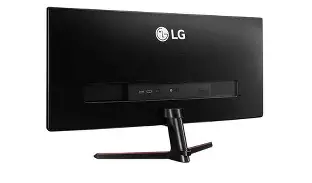
- Cons: Stand Adjustability – The stock stand often lacks height adjustment, offering only tilt functionality. Many users find themselves needing a VESA mount or a monitor riser to achieve an ergonomic viewing height.
- Cons: MBR Brightness Drop – While the 1ms MBR feature is great for clarity, the drop in brightness when it is active can be distracting in well-lit rooms.
- Cons: Cinematic Black Bars – While 21:9 content looks spectacular, standard 16:9 content (like most YouTube videos) will result in black bars on the left and right sides of the screen.
Buying Guide: Is the 29Um69G B Right for You?
Choosing a monitor depends heavily on the primary use case. The 29Um69G B is a specialized tool that excels in specific environments but may not be the ideal choice for everyone. Before making the transition, potential buyers should evaluate their needs against the following criteria.
1. Evaluate Your Desk Space
While the 29Um69G B is wider than a standard monitor, it is still manageable. It typically measures around 27.8 inches in width. Measure your desk to ensure you have enough room for the monitor and your speakers. Because the screen is wide, if you use external speakers, you will need to place them further apart than you would with a 24-inch screen.
2. Consider Your Primary Tasks
If your day consists of managing large datasets in Excel or writing complex code, the extra horizontal space is a godsend. However, if your work involves purely vertical tasks—such as reading long legal documents or mobile-first web design—you might find that a high-resolution 16:9 monitor rotated into portrait mode is more effective. The 29Um69G B is best for those who juggle multiple applications simultaneously.
3. Check Your Hardware Compatibility
One of the most overlooked aspects of switching to an Ultrawide is the connectivity. The 29Um69G B offers HDMI, DisplayPort, and USB-C. To get the most out of the monitor, especially the FreeSync and higher refresh rates, using the DisplayPort is recommended. If you plan to use the USB-C port with a laptop, verify that your laptop's USB-C port supports "Alt Mode" for video output.
4. The Question of 29 vs. 34 Inches
This is the most common dilemma. A 29-inch 1080p Ultrawide has roughly the same height as a 23-inch standard monitor. A 34-inch 1440p Ultrawide has the same height as a 27-inch standard monitor. If you are coming from a 27-inch screen, the 29Um69G B will feel like a "downgrade" in vertical size. If you are coming from a 21 or 24-inch screen, it will feel perfectly natural.
5. Gaming Preferences
If you play immersive titles like Flight Simulator, Racing Sims, or Open-World RPGs (like The Witcher or Cyberpunk), the 21:9 aspect ratio provides a significantly improved sense of scale. The peripheral vision afforded by the extra width makes the game world feel more encompassing. However, for competitive eSports players who prefer a very small focus area to minimize eye movement, a standard 24-inch screen might still be the traditional preference.
Real-World Reliability and Long-Term Use
After the initial "honeymoon phase" of switching to the 29Um69G B, users often begin to appreciate the smaller details. The On-Screen Control software is a noteworthy addition. Instead of fumbling with physical buttons under the bezel, users can adjust volume, brightness, and even specific "Screen Split" layouts using a mouse-driven interface. This software also allows for "Application Presets," where the monitor can automatically switch to a specific picture mode when a particular program is opened—for example, switching to "Cinema" mode when a video player is launched and back to "Reader" mode when Microsoft Word is active.
Find top-rated Electronics products at great prices.
See Deals →In terms of build quality, the 29Um69G B follows a modern, minimalist aesthetic. The matte finish on the screen is highly effective at diffusing reflections from windows or overhead lights, which is a critical factor for maintaining focus during long work hours. The input lag is minimal, making the desktop experience feel snappy and responsive. While the built-in speakers are adequate for system notifications or casual YouTube browsing, they lack the low-end punch required for a satisfying movie or gaming experience; most users will likely pair the monitor with external speakers or a headset.
One technical detail that often emerges in long-term evaluations is the IPS Glow. This is a common characteristic of all IPS panels, where a faint light can be seen in the corners of the screen when viewing very dark content in a dark room. On the 29Um69G B, this is generally well-controlled, but it is something to be aware of if you frequently watch movies in a pitch-black environment. Proper ambient lighting behind the monitor can virtually eliminate the perception of this glow while also reducing eye strain.
Ergonomic Considerations
Transitioning to an Ultrawide screen requires a slight adjustment in how you sit. Because the screen is wider, you may find yourself sitting slightly further back than you did with a 16:9 monitor to take in the entire field of view without excessive neck movement. If the stock stand does not allow the monitor to sit at eye level, a VESA-compatible monitor arm is a highly recommended investment. Lifting the monitor off the desk not only improves posture but also reclaims a significant amount of desk space, which can be used for a cleaner, more organized workstation.
For those who use the monitor for reading, the "Reader Mode" is an essential feature. It reduces blue light emissions and adjusts the color temperature to a warmer, more paper-like hue. This is particularly useful for late-night sessions where blue light might otherwise interfere with sleep patterns. The flicker-safe technology also contributes to a more comfortable viewing experience by eliminating the invisible flickering of the backlight that can cause headaches during prolonged use.
The Impact on Entertainment
Beyond work and gaming, the 29Um69G B transforms the movie-watching experience. Many major motion pictures are filmed in the 2.35:1 or 2.39:1 aspect ratio. When viewed on a standard 16:9 television or monitor, these films have black bars at the top and bottom. On a 21:9 monitor like the 29Um69G B, these films fill the entire screen, providing a truly cinematic experience. While streaming services like Netflix and Disney+ sometimes require a browser extension to properly format the video to fill the Ultrawide space, the result is significantly more immersive than viewing on a traditional screen.
Conclusion
Switching to the 29Um69G B is more than just a hardware upgrade; it is a shift in how one interacts with the digital world. The move to a 21:9 aspect ratio offers tangible benefits for productivity, allowing for a more streamlined and efficient workflow by providing the space needed for multi-tasking without the complexity of multiple screens. For gamers, it offers a wider field of view and specialized features that provide a competitive edge and deeper immersion.
While there are considerations regarding vertical resolution and stand adjustability, the overall package presented by the 29Um69G B is compelling. It offers a high-quality IPS panel, modern connectivity, and a robust feature set that caters to a wide variety of users. Whether you are a student looking to keep research and essays open side-by-side, a creative professional needing a longer timeline, or a gamer seeking a panoramic view of the battlefield, this monitor serves as a versatile and effective centerpiece for a modern desk setup. The transition to Ultrawide is often a one-way street; once you have experienced the utility of the extra horizontal space, going back to a standard 16:9 display feels like looking at the world through a much smaller window.