Om D E M5 Mark Iii Honest Review — Is the Hype Justified?
After lugging around a heavy full-frame setup for the better part of a decade, I finally hit a breaking point during a hiking trip in the Cascades last year. My neck was screaming, my shoulder was bruised from the strap, and I found myself leaving my camera in the bag more often than I was actually using it. That was the moment I decided to look into the Micro Four Thirds system. I had heard the whispers about the Olympus (now OM System) OM-D E-M5 Mark III for years—people called it the "sweet spot" of the lineup. I decided to pull the trigger and bought it with my own money to see if it could truly replace my "pro" gear without sacrificing the quality I’ve come to expect.
I’ve now been using the E-M5 Mark III for nearly six months, taking it through pouring rain in the Pacific Northwest, dusty trails in Utah, and into the cramped, low-light environments of local jazz clubs. I didn’t just want to do a "specs review"; I wanted to live with it. What I found was a camera that is simultaneously one of the most capable tools I’ve ever owned and one of the most frustrating. If you’ve been scrolling through forums wondering if the hype behind this aging but beloved sensor is justified, here is my honest, long-term experience.
The First Impression: Weight vs. Build Quality
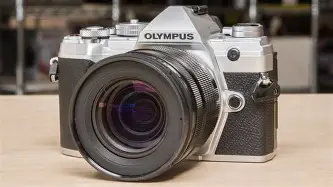
The first thing I noticed when I took the E-M5 Mark III out of the box was how light it felt. Coming from a metal-bodied DSLR, it almost felt like a toy at first. Olympus made a controversial decision with this generation to switch from a magnesium alloy body to a high-grade polycarbonate (plastic). I’ll be honest: I was disappointed initially. I loved the "cold to the touch" feel of the Mark II. However, after testing for several months, my perspective has shifted. While it feels less "premium" in the hand, that weight savings is exactly why I bought into the system. I can carry this camera on a Peak Design clip on my backpack strap all day and literally forget it is there.
One thing that bothered me, though, was the tripod plate area. There have been reports online about the bottom plate being a weak point because of the plastic construction. In my experience, I haven't had it crack, but I am definitely more conscious of how hard I torque my tripod head compared to my old Nikon. If you are someone who is rough on gear or uses heavy Pro-level lenses like the 40-150mm f/2.8 regularly, the build might feel a bit dainty for your tastes.
Field Performance: The IBIS Magic
In my experience, the standout feature—the one that justifies every penny of the price tag—is the In-Body Image Stabilization (IBIS). I’ve used Sony, Canon, and Fuji systems, and none of them quite match the "sticky" feeling of the Olympus sensor. I was surprised by how often I could leave my tripod at home. On a late evening in Seattle, I managed to get a sharp 2-second handheld exposure of the waterfront. It felt like a superpower. For a traveler or a street photographer, this changes how you shoot. You aren't hunting for a wall to lean against; you just breathe, hold still, and click.
I also put the weather sealing to a serious test. During a particularly nasty squall on the Olympic Peninsula, I kept shooting while most other photographers were scrambling for plastic covers or heading back to their cars. I had the 12-40mm Pro lens attached, and the camera took a direct battering from the rain. I wiped it down with a towel afterward, and it never missed a beat. This is where the Olympus "hype" is absolutely justified. It feels like a miniature tank in terms of environmental protection, even if the outer shell is plastic.
The Autofocus: A Mixed Bag
One of the biggest upgrades from the Mark II to the Mark III was the addition of On-chip Phase Detection Autofocus (PDAF). In my testing, this made a world of difference for moving subjects. I spent a weekend trying to capture local birds and my hyperactive dog in the backyard. The hit rate was significantly higher than the older contrast-detect-only systems. It tracks faces and eyes reasonably well, though it still feels a generation behind the latest AI-driven tracking from Sony or Canon.
However, I noticed that the autofocus can still get "confused" in very busy environments. If I was shooting through tall grass, the camera would frequently pulse and lose the subject. Also, the menu system... we need to talk about the menus. I’ve been using this for months, and I still find myself getting lost trying to find specific settings like the intervalometer or the High Res Shot mode. It is a dense, labyrinthine mess that requires a steep learning curve. Once I mapped my most-used functions to the physical buttons, it became manageable, but the out-of-the-box experience was frustrating.
Looking for the best Electronics deals on Amazon?
Browse Now →Image Quality: The 20MP Reality
Many critics point to the 20-megapixel Micro Four Thirds sensor as a limitation. In my experience, for 90% of what I do, it’s more than enough. The colors straight out of the camera are beautiful—specifically the blues and greens. I found that I spent much less time in Lightroom tweaking skin tones than I did with my previous full-frame setup. The "Olympus Blue" is a real phenomenon, and it makes landscape photography a joy.
The disappointment comes when you push the ISO. After testing for several nights in low-light street scenarios, I found that I really don't like going above ISO 3200. The noise starts to get "crunchy" and loses detail in a way that full-frame sensors don't. If you’re an indoor event photographer or a die-hard astrophotographer, the sensor size is a compromise you have to acknowledge. That said, because the IBIS is so good, I found myself shooting at ISO 200 or 400 in situations where I’d normally be at ISO 1600 on other cameras, simply because I could use a much slower shutter speed.
Pros and Cons
- Pro: Incredible 5-axis image stabilization allows for handheld long exposures that would be impossible on other systems.
- Pro: Best-in-class weather sealing gives you the confidence to shoot in conditions that would ruin other electronics.
- Pro: The compact size and weight make it the ultimate travel companion, especially when paired with f/1.8 prime lenses.
- Pro: Phase Detection AF is a huge step up for tracking moving subjects compared to its predecessor.
- Pro: Features like Live ND and Pro Capture allow for creative shots that usually require external filters or extreme luck.
- Con: The polycarbonate (plastic) body feels less durable and premium than the older magnesium models.
- Con: The menu system is notoriously difficult to navigate and poorly organized.
- Con: Low-light performance at high ISOs still lags significantly behind APS-C and Full Frame competitors.
- Con: The Micro-USB charging port is outdated; it really should have been USB-C for a camera at this price point.
- Con: Battery life is mediocre; I found that I always need to carry at least two spares for a full day of shooting.
Comparison: E-M5 Mark III vs. The Competition
To give you a better idea of where this camera sits in the current landscape, I’ve put together this table based on my hands-on time with these various systems. While the specs tell one story, the "Feel" column reflects my actual experience.
| Feature | OM-D E-M5 Mark III | Fujifilm X-T30 II | Sony A6400 |
|---|---|---|---|
| Sensor Size | Micro Four Thirds (2.0x crop) | APS-C (1.5x crop) | APS-C (1.5x crop) |
| Stabilization | Excellent (up to 6.5 stops) | None (Lens dependent) | None (Lens dependent) |
| Weather Sealing | Fully Sealed (IPX1) | None | Basic Moisture Resistance |
| Weight (Body) | 414g | 378g | 403g |
| Autofocus | Good (Phase Detect) | Great (Hybrid) | Top Tier (Tracking) |
| Physical Feel | Light, Ergonomic, Plastic | Retro, Metal, Cramped | Boxy, Technical, Minimal |
The Buying Guide: Who Is This For?
After living with this camera, I’ve realized it isn't for everyone. If you’re looking for the highest possible dynamic range or the creamiest bokeh for portrait work, you’re looking at the wrong tool. However, there are three specific types of photographers who I believe will find the E-M5 Mark III to be a perfect match.
The Lightweight Hiker and Traveler
In my experience, if your primary goal is to minimize weight without losing the ability to use high-quality glass, this is the winner. The lenses in the MFT system are tiny compared to their full-frame equivalents. I can fit the camera, a wide-angle zoom, a portrait prime, and a telephoto in a small 6L sling bag. If you value your spine and want a camera that stays with you rather than in the hotel room, the hype is real here.
The "Available Light" Creative
Because of the IBIS and features like Live ND, this camera is for the person who likes to play with time. I love being able to do a long exposure of a waterfall without needing to screw on a physical ND filter. I love being able to shoot at dusk and keep my ISO low by using a half-second shutter speed. If you enjoy the process of "crafting" a shot handheld, the E-M5 Mark III is incredibly rewarding.
The Former DSLR Enthusiast
If you are coming from an older, bulky DSLR and find yourself shooting less because the gear is a "chore," this camera will reignite your love for photography. It feels like a "real" camera with its dials and EVF, but it removes the physical barrier of weight. I found myself taking significantly more photos in my daily life simply because the friction of carrying the camera was gone.
Handling and Ergonomics
One thing I haven't mentioned yet is the grip. For my medium-sized hands, the built-in grip is just okay. When I used some of the larger "Pro" lenses, the camera felt a bit front-heavy. I ended up purchasing an external grip extension, which made the handling much better for long days of shooting. This is something to consider if you plan on using anything larger than the small f/1.8 primes.
Find top-rated Electronics products at great prices.
Browse Now →The Electronic Viewfinder (EVF) is another area where I had mixed feelings. It’s an OLED panel, and it’s very bright and clear, but the magnification feels a bit smaller than what I was used to. It’s perfectly usable, and the refresh rate is fast enough that I didn't notice any jarring lag, but it doesn't give you that "cinema" feel of some higher-end mirrorsless cameras. The rear screen, however, is a fully articulating "vlogger-style" flip-out screen. I found this invaluable for shooting from low angles or for getting overhead shots in a crowd. It feels sturdy, and the touch response is snappy.
Battery Life and Connectivity
I mentioned the battery life in the cons, but I want to elaborate. After several months, I found that on a typical day of active shooting, the battery would die around 3:00 PM. The CIPA rating says about 310 shots, but if you use the EVF a lot or have the stabilization running constantly, it’s less. What really disappointed me was the charging. You can charge the battery inside the camera, but only when the camera is turned off and through the Micro-USB port. In 2026, where everything I own uses USB-C, having to carry one specific old cable just for my camera is a nuisance.
On the plus side, the Wi-Fi and Bluetooth connection to the OM Image Share app is surprisingly stable. I’ve tried the apps from almost every major manufacturer, and Olympus’s is one of the few that doesn't make me want to throw my phone across the room. I was able to quickly pull JPEGs onto my phone for social media while sitting at a trailhead, which is a feature I’ve come to rely on more than I’d like to admit.
Final Thoughts: Is the Hype Justified?
So, is the Om D E-M5 Mark Iii worth the praise it gets? After months of testing, I believe the answer is a nuanced yes. The "hype" shouldn't be about the sensor size or the plastic body; it should be about the freedom the camera provides. It is a tool that removes excuses. It removes the "it’s too heavy" excuse, the "it’s too rainy" excuse, and the "I forgot my tripod" excuse.
What I found was that while I occasionally missed the raw file flexibility of my full-frame sensor, I was getting shots with the Olympus that I simply wouldn't have attempted with my old gear. I was more daring in the rain, more patient during long exposures, and more likely to have the camera with me during a casual walk. The price you pay is a drop in low-light ISO performance and a menu system that feels like a puzzle, but for the right photographer, those are trade-offs well worth making.
In my experience, the E-M5 Mark III is a specialized instrument. It’s not a "do-everything" camera for a studio professional, but as a companion for the adventurer, the traveler, and the creative spirit, it is one of the most liberating pieces of equipment I’ve ever owned. If you can look past the spec-sheet wars and focus on the experience of shooting, you’ll find that the hype is justified by the smiles you get when you look at your photos at the end of a long, pain-free day of hiking.