The Ultimate Showdown: Honor Magicbook Pro 14 2026 vs Turtle Beach Vulcan Ii Max for 2026
Introduction
When shoppers evaluate computing setups in 2026, choices often split across two complementary but very different product categories: the laptop that runs the work and the headset that shapes the experience. The Honor MagicBook Pro 14 2026 and the Turtle Beach Vulcan II Max occupy those adjacent roles. One is a 14-inch portable workstation aimed at everyday productivity and light content creation; the other is a premium gaming and communications headset focused on immersive audio and clear voice capture. This article compares both devices side-by-side to help readers decide what matters most for their use cases — from hybrid work and travel to competitive gaming and streaming.
How to read this comparison
This analysis treats the Honor MagicBook Pro 14 2026 as the primary computing platform and the Turtle Beach Vulcan II Max as a specialist audio accessory. The goal is not to determine a single “winner” — they serve different roles — but to assess strengths, trade-offs, and which buyer profiles benefit most from each purchase. Real-world considerations such as battery life, comfort during long sessions, microphone quality for calls, and port selection are emphasized.
Detailed product reviews and analysis
Honor MagicBook Pro 14 2026 — analysis
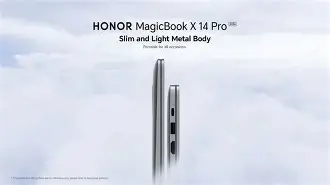
The MagicBook Pro 14 2026 positions itself where portability, screen quality, and everyday performance converge. For people who prioritize a compact chassis without sacrificing a capable keyboard, a bright display, and modern connectivity, a 14-inch "Pro" laptop is often the sweet spot. Honor’s MagicBook line historically balances design and price, and the 2026 iteration continues that trend for buyers who need a primary machine for remote work, college, light photo and video editing, and general productivity.
Real-world strengths center on three areas: display and mobility, balanced performance, and practical I/O. A 14-inch panel is large enough for spreadsheets and split-screen editing but small enough to slide into a commuter bag. Performance aims to be sufficient for multitasking — web-based collaboration, running virtual meetings, and light creative apps — while preserving battery life for a full workday in typical office or classroom use. The chassis and keyboard design prioritize everyday comfort: a responsive trackpad, predictable hinge, and a keyboard that can handle sustained typing sessions.
When evaluating the MagicBook Pro 14 2026, buyers should consider configurability (RAM and SSD choices), thermal performance under sustained workloads, and the webcam/microphone array for frequent video calls. For content creators, a color-accurate display and available ports for external monitors and storage are deciding factors; for students and professionals, weight, battery longevity, and reliable wireless connectivity will dominate.
Turtle Beach Vulcan II Max — analysis
Turtle Beach’s Vulcan II Max is aimed at players and streamers who require comfortable long-session wear, dependable microphone performance, and sound that balances gaming immersion with vocal clarity. Headset buyers in 2026 are less tolerant of cheap microphone capture or cramped earcup designs — the market demands comfort, easy platform compatibility, and a sound signature that supports positional awareness and pleasant music playback.
Looking for the best Laptops & Computers deals on Amazon?
Shop Amazon →The Vulcan II Max emphasizes comfort across long sessions (padded headband, memory foam or soft materials on earcups), simple connectivity for PC and consoles, and a microphone system tuned to remove background noise and deliver intelligible speech to teammates or audiences. For remote workers who do daily video calls or podcasters seeking a portable microphone solution, a headset like this can be attractive because it merges listening and voice capture in a single device.
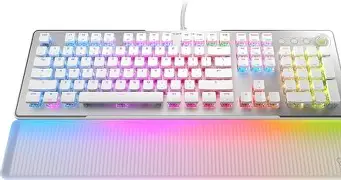
Buyers should weigh wired vs. wireless variants, platform features (e.g., software-based EQ and microphone processing), and physical ergonomics. Gamers will look for a soundstage that supports competitive play while offering warm tones for streaming music. Hybrid users will care about how well the headset performs for both game audio and meeting audio, and whether it pairs easily with the MagicBook Pro or other laptops.
Pros & Cons
Honor MagicBook Pro 14 2026
- Pros: Compact 14-inch form factor that balances screen real estate and portability; likely strong screen quality for productivity; modern connectivity useful for docks and external displays; keyboard and trackpad optimized for daily typing; typically competitive price-to-performance for its segment.
- Cons: Not a desktop replacement for heavy 3D rendering or high-end gaming; potential thermal throttling under prolonged maximum loads depending on configuration; integrated speakers and webcam may be adequate but not class-leading for creators; upgrade options may be limited in thin-and-light designs.
Turtle Beach Vulcan II Max
- Pros: Comfortable for long sessions with well-padded earcups and headband; microphone designed for clear voice capture with software assists; tuned for a balance of gaming clarity and music playback; cross-platform compatibility (PC, consoles, mobile) in many variants.
- Cons: As with most gaming headsets, sound signature might favor presence and impact over absolute audiophile neutrality; bulky for travel compared with earbuds; microphone and onboard processing quality vary depending on platform and software drivers; wireless models add weight and require battery management.
Comparison table
| Category | Honor MagicBook Pro 14 (2026) | Turtle Beach Vulcan II Max |
|---|---|---|
| Product type | 14-inch ultraportable laptop | Over-ear gaming/communication headset |
| Primary use | Productivity, light content creation, daily computing | Gaming, streaming, voice calls |
| Portability | High — fits in backpacks, commuter-friendly | Medium — portable but bulkier than earbuds |
| Performance focus | CPU/GPU balance for multitasking and media editing | Audio fidelity, comfort, mic quality |
| Battery impact | Self-powered, battery life varies by workload | Wireless models require battery; wired models draw from host |
| Connectivity | USB-C charging/display, Wi‑Fi, Bluetooth | Wired USB/3.5mm or wireless USB/Bluetooth; some platform-specific features |
| Best for | Students, professionals, mobile creators | Gamers, streamers, remote communicators |
| Value proposition | All-in-one computing with work and light creative capability | Dedicated audio/voice tool that elevates communications and immersion |
Real-world use cases — who should pick which?
Honor MagicBook Pro 14 2026
- Remote professional who travels: The MagicBook Pro 14 prioritizes a small footprint and battery life, making it easier to do full workdays away from a desk. Its display size supports side-by-side documents, and a comfortable keyboard helps for long writing sessions.
- Student or hybrid learner: Lightweight design and reliable performance for note-taking, browsing, and video lectures are practical benefits. Students who occasionally edit photos or create short videos will find the laptop capable enough without carrying a heavier machine.
- Casual content creator: For creators producing short-form video, social media content, or podcast editing, the MagicBook Pro can be a capable platform when paired with an external microphone or headset for improved audio capture.
Turtle Beach Vulcan II Max
- Competitive gamer/streamer: If communication clarity and long-session comfort are priorities, the Vulcan II Max is well-suited. Good microphone behavior and a sound profile tuned for spatial awareness help in team-based competitive play and streaming.
- Remote worker on frequent calls: Users who prefer a headset for consistent voice quality during meetings, or who work in noisy environments, will appreciate a headset that isolates ambient sound while delivering clear speech to others.
- Casual listener who games and watches media: A headset combines immersive game audio with comfort for extended movie nights or music listening when room acoustics or speaker privacy is a concern.
Buying guide — how to choose between them (or both)
Choosing between the MagicBook Pro and the Vulcan II Max isn’t necessarily an either/or decision; many users buy a laptop and a headset to get the best of both worlds. The decision process should map to priorities and budget.
Step 1 — Identify your primary need
- Computation and mobility: If the primary need is a daily machine for productivity, prioritize the laptop. Consider battery life, weight, screen brightness, and keyboard comfort.
- Audio and communication: If voice clarity and immersive audio are crucial (e.g., streaming, pro gaming, or frequent calls), prioritize the headset.
Step 2 — Evaluate compatibility and ecosystem
- Check whether the headset’s wired/wireless modes pair well with the laptop. USB audio, Bluetooth, and 3.5mm jack support determine plug-and-play experience.
- Review whether laptop ports support passthrough charging or external displays if consulting multiple-monitor setups.
Step 3 — Consider long-term comfort and ergonomics
- For laptops: keyboard travel, hinge stability, and thermal comfort under load matter for extended use.
- For headsets: earcup materials, clamping force, and headband padding directly impact comfort in multi-hour sessions.
Step 4 — Prioritize microphone vs. speaker quality
- Microphone clarity matters more than onboard speaker finesse if frequent calls or streaming are part of the workflow. Many laptop mics are serviceable, but a dedicated headset mic often yields better results in noisy environments.
- If content creation requires pristine capture, a separate USB/XLR mic may still beat integrated headset mics — however, headsets give convenience and consistent voice levels.
Step 5 — Budget and upgrade path
- Set a budget for the laptop first, because it determines the baseline for productivity. If budget permits, adding a quality headset later is a modest investment to improve audio and communications.
- Assess repairability and upgradability: SSD and RAM options, warranty coverage, and software support longevity influence total cost of ownership.
Practical tips for pairing the two
- When using a headset with a laptop, disable laptop speakers in system settings to avoid echo in calls, and use the headset as the default input and output device.
- Use the laptop’s USB-C port to connect a dock if multiple USB accessories are needed alongside the headset; this avoids port contention for single-port ultraportables.
- Update firmware and drivers for both devices to unlock platform features (EQ, mic noise suppression). Manufacturers sometimes ship performance and compatibility improvements post-release.
- For podcasting or streaming, consider routing audio through virtual mixer software to control levels from the laptop while taking advantage of headset pass-through monitoring.
Questions buyers typically ask
“Will the laptop handle my video-editing tasks?”
For short edits and social-media-length content, a modern 14-inch laptop with efficient mobile processors and an SSD is usually sufficient. For longer timelines, multi-layer effects, or high-resolution footage, a higher-end configuration or desktop workstation remains preferable. Buyers should look for sufficient RAM and a capable storage subsystem more than raw core counts alone.
“Is a headset necessary if the laptop has good speakers?”
Headsets provide private, immersive audio and consistent microphone placement — major advantages for gaming, streaming, or any scenario where external noise control or low latency monitoring matters. For music or casual media in quiet rooms, good laptop speakers may suffice; for collaboration or gameplay, a headset often improves communication quality.
Looking for the best Laptops & Computers deals on Amazon?
View Offers →“How important is software support?”
Software can significantly shape device experience: headset companion apps add EQ presets, virtual surround options, and mic processing; laptop firmware updates improve battery life, thermal behavior, and driver compatibility. Buyers should prefer manufacturers known for timely updates and clear support channels.
Conclusion
In 2026, the decision between the Honor MagicBook Pro 14 and the Turtle Beach Vulcan II Max is less about head-to-head superiority and more about role fit. The MagicBook Pro 14 remains a sensible choice when the primary need is a modern, portable computing device capable of handling daily productivity and light creative work. The Turtle Beach Vulcan II Max excels as a dedicated audio and voice accessory that enhances gaming, streaming, and remote communication.
For most buyers, the correct outcome is complementary: a capable laptop plus a quality headset yields the most flexible setup for work, play, and content creation. If a single purchase must be chosen, map the choice to the user’s daily priorities — compute-first users should favor the MagicBook Pro 14; communication- and audio-first users should favor the Vulcan II Max. Either way, attention to ergonomics, compatibility, and software support will pay dividends in long-term satisfaction.